
The Somnia Reactivity Mini Hackathon brought together over 350 developers, resulting in 146 projects built on Somnia’s native onchain reactivity.
The hackathon challenged developers to use Somnia Reactivity to build something interesting.
Reactivity allows smart contracts to subscribe to events and execute automatically when conditions are met. No polling, no external listeners, no off-chain infrastructure. Validators invoke contracts directly when triggers fire.
For developers used to running backend services or keeper bots, this changes how applications are designed. What followed was a wide range of use cases, from games and DeFi protocols to insurance, inheritance systems, and workflow engines, all built on the same primitive.
Here are ten of the projects that stood out.
SomMemo
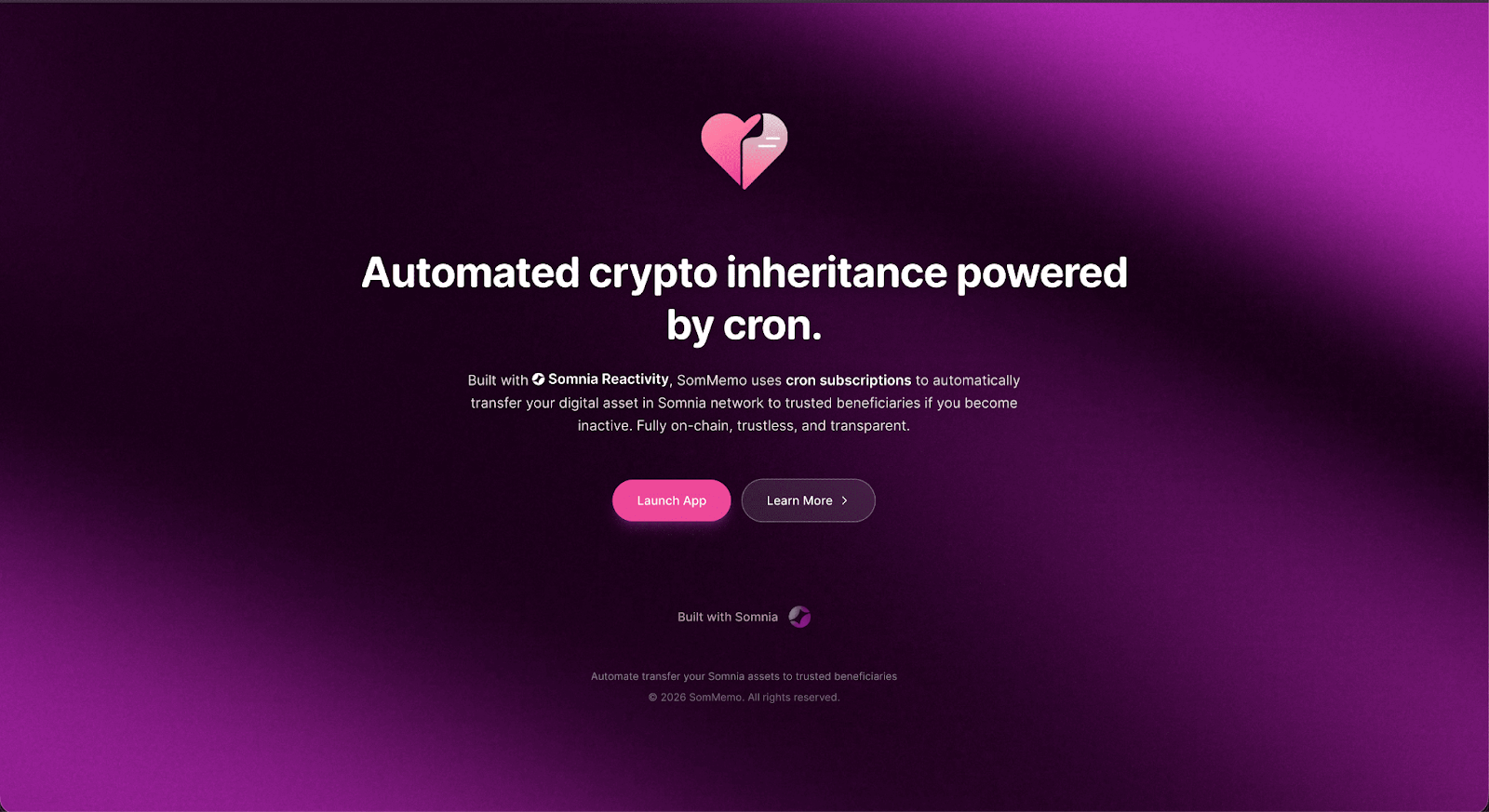
SomMemo is an on-chain digital will. Users assign a beneficiary, deposit STT into a vault, and set an inactivity deadline. If they fail to check in before that deadline expires, Somnia validators automatically trigger the asset transfer to the beneficiary through a one-time schedule (cron) subscription.
The cron trigger fires at the exact deadline timestamp and self-destructs after execution, so there’s no recurring gas cost. Users can check in at any time to reset the timer, update their beneficiary, or withdraw their assets. The entire system runs without keepers, off-chain servers, or trusted third parties, which addresses one of crypto’s longest-standing unsolved problems: what happens to your assets when you can’t access them anymore.
DeathArena
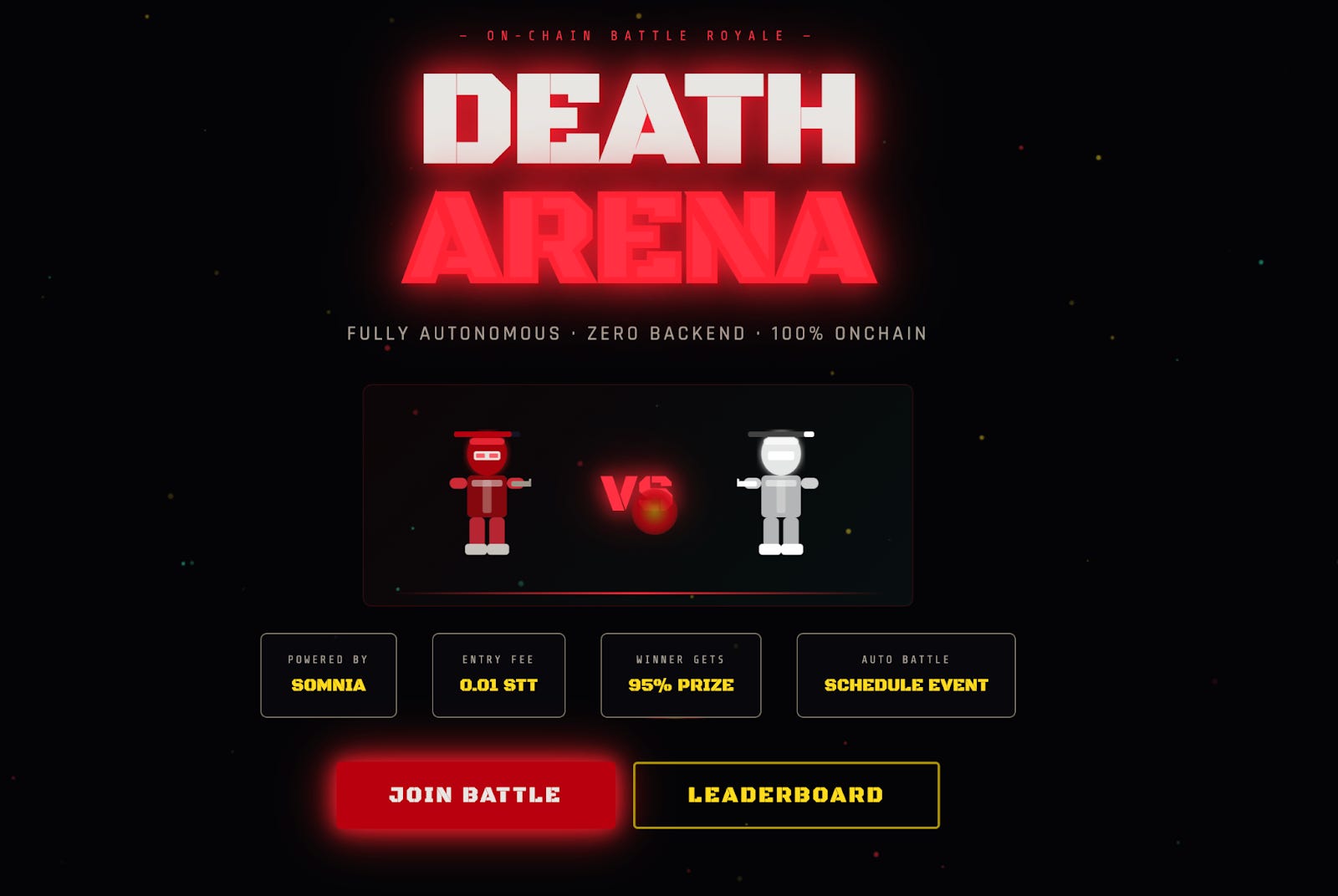
DeathArena is a fully autonomous battle royale game where the entire lifecycle runs without human intervention. Players pay a 0.01 STT entry fee to join a season, and when the waiting period ends, the battle begins automatically. Fighters attack and heal round by round until one survivor remains and receives 95% of the prize pool.
The game uses four reactivity subscriptions (three permanent, one dynamic per season) that form a self-sustaining loop. When a new season is created, a BattleWatcher contract catches the event and registers a Schedule subscription for the exact millisecond the battle should start. When that time arrives, validators trigger the battle, and each combat round emits a RoundResult event that immediately triggers the next round through a chained subscription. A 10-player battle resolves in seconds through this cascade of on-chain reactions. Once deployed, the game runs forever, cycling through seasons without anyone needing to be online.
Mirra
Mirra is a reactive copy-trading protocol where a single leader swap triggers an automatic cascade across seven contracts in the same block: mirror execution, risk checks, position tracking, and reputation scoring.
The system works through three chained reactivity subscriptions. When a leader swaps on SimpleDEX, MirrorExecutor’s _onEvent() fires via Subscription #1, pulling tokens from the follower’s vault and executing a proportional swap. That mirror trade emits a MirrorExecuted event, which triggers RiskGuardian via Subscription #2 to run stop-loss checks in the same block. If losses exceed the follower’s threshold, the position is emergency-closed atomically. A third subscription handles pagination when a leader has more than five followers.
Mirra also ships with Oni, an AI agent that executes trades autonomously through session keys. After a one-time EIP-191 authentication, users can issue natural language commands like “swap 10 STT for USDC” without wallet popups. Sessions expire after 30 minutes with a 50 STT spending cap. The agent has 18 tools (nine read, nine write) and streams live activity through the Somnia Reactivity SDK over SSE.
NFT Referral Dynasty
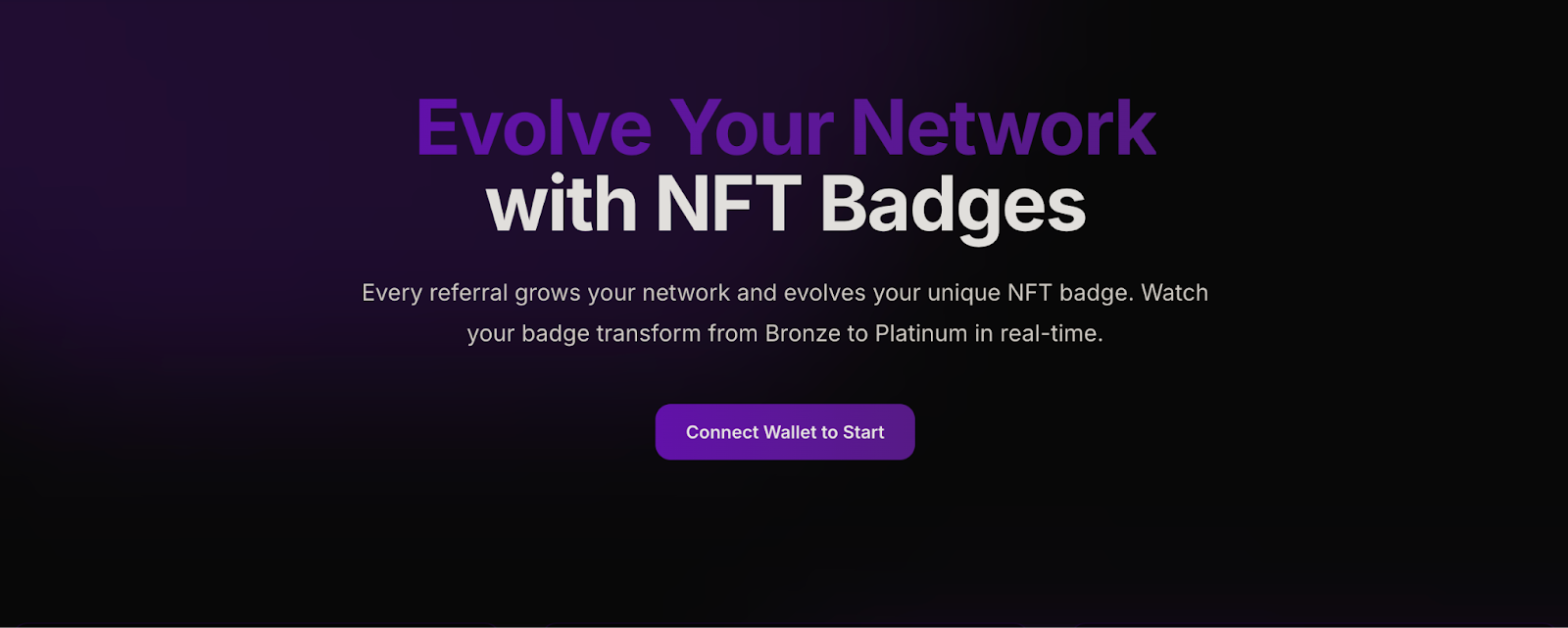
NFT Referral Dynasty is an on-chain referral system where users earn NFT badges that evolve automatically as they refer more people. When a new user registers through a referral link, Somnia Reactivity triggers badge minting and reward distribution in the same block, with no manual claims or external indexing.
The team solved an inheritance conflict between ERC721 and SomniaEventHandler by splitting the system into three contracts. UserRegistry emits registration events, ReferralBadge handles the ERC721 NFT logic with tier tracking, and ReferralDynasty acts as the reactive handler that listens for events and coordinates minting, badge evolution (Bronze through Platinum based on referral count), and reward distribution. The frontend includes a live badge gallery, real-time leaderboard, and wallet integration.
ReactGuard
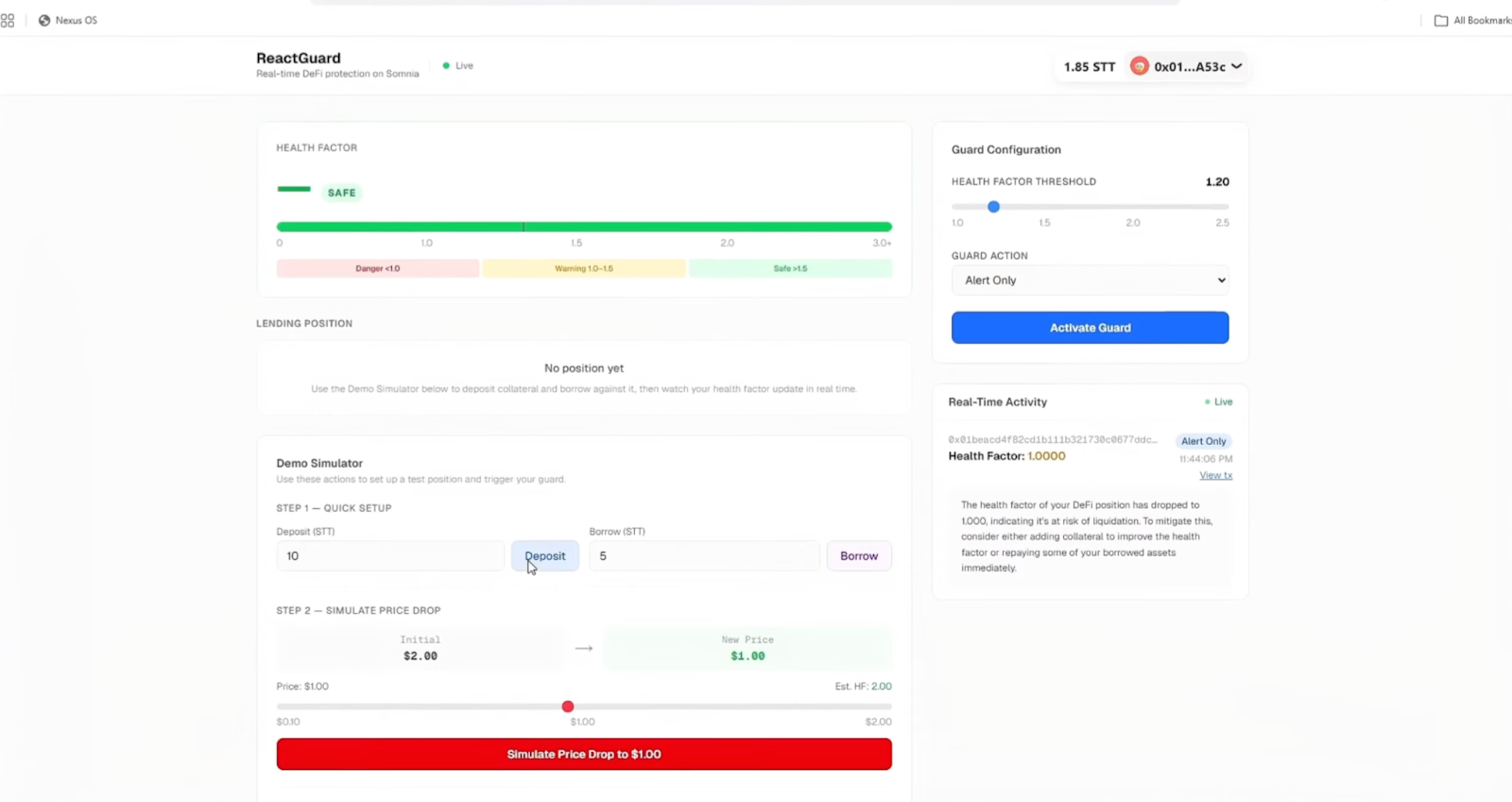
ReactGuard is a real-time DeFi protection layer built on Somnia’s reactive architecture. Where most DeFi monitoring systems rely on off-chain indexers and periodic polling, ReactGuard subscribes to on-chain events and responds to risk conditions within the same block they occur.
The project focuses on lending position health. When a collateral position approaches liquidation risk, the system triggers alerts and automated safeguards without the delay that comes from polling RPC nodes or running backend monitoring services. The team’s longer-term vision is to build a universal protection framework for DeFi on reactive blockchains, combining real-time event detection with automated on-chain responses.
ScratchWins
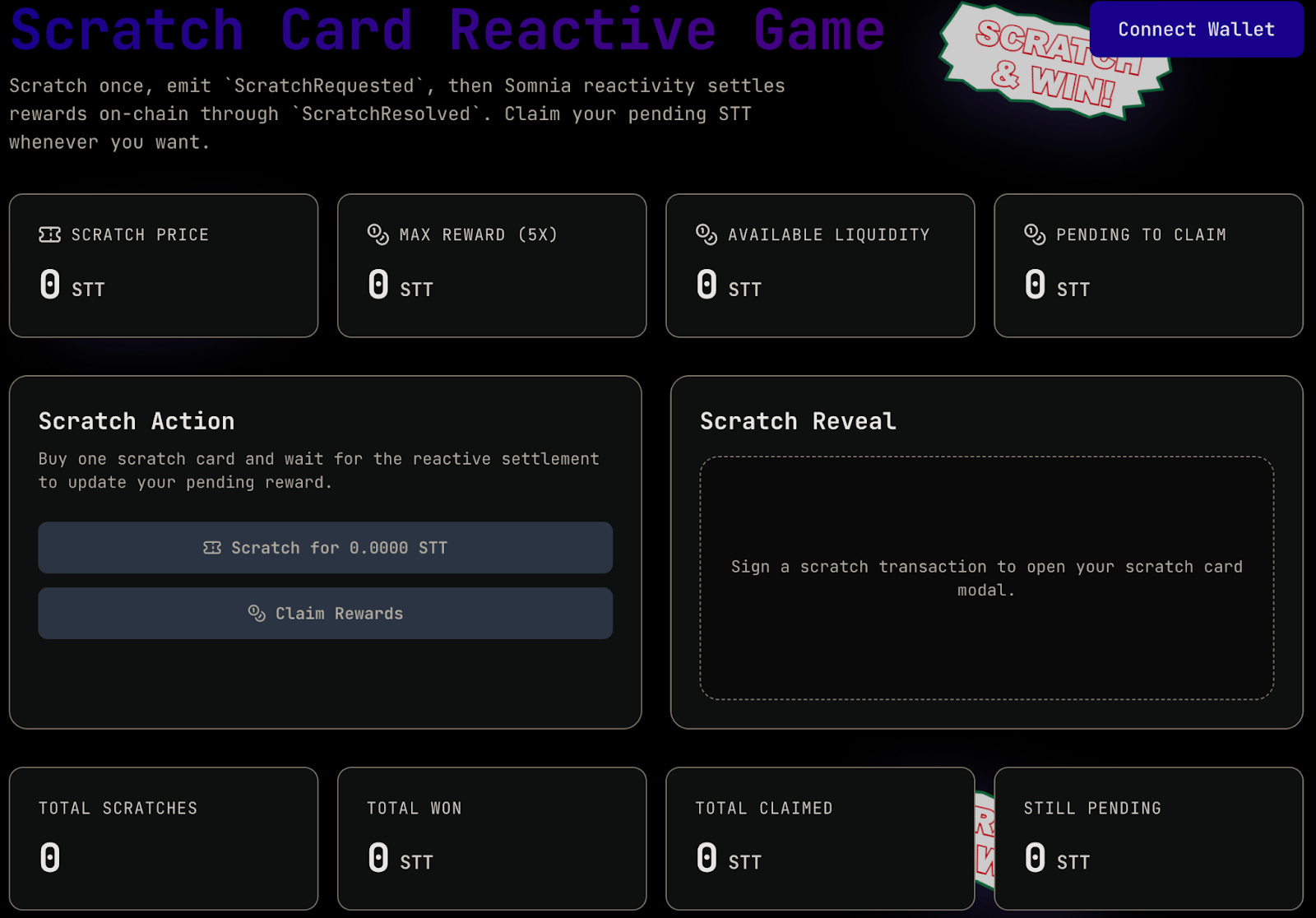
ScratchWins is an on-chain scratch card game where players pay a fixed fee to scratch a digital card with a chance to win STT rewards. Each scratch is recorded on-chain and results are generated automatically. Winners accumulate a pending balance they can claim at any time from the contract.
The game has already seen real usage on testnet, with 38 players, 224 scratch cards played, 327 on-chain transactions, and 22.40 STT in claimed rewards across 666 contract transactions.
Streamline
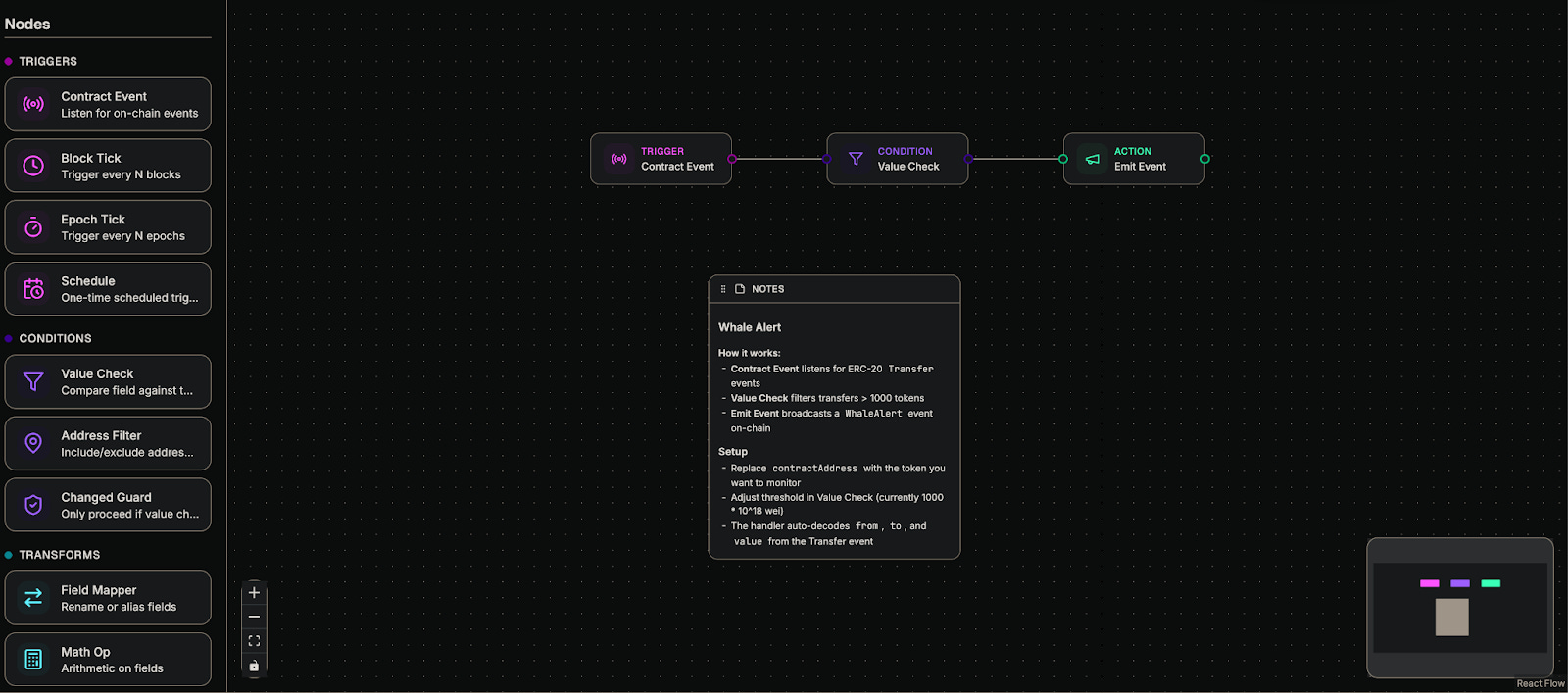
Streamline is a visual, no-code automation builder for Somnia Reactivity. Users drag trigger, condition, and action nodes onto a canvas, connect them, and click deploy. Under the hood, the system compiles the visual workflow into a Solidity handler contract, deploys it to the testnet, funds it with STT, and subscribes it to the Reactivity precompile, all in one click.
The tool supports 12 node types across four categories. Triggers include ContractEvent, BlockTick, EpochTick, and Schedule. Conditions cover value checks, address filtering, and change guards. Transforms handle field mapping and arithmetic. Actions include contract calls, token transfers, and custom event emission. Four pre-built templates ship with the tool: Whale Alert, Auto-Compound, Liquidation Guardian, and Scheduled Distribute.
Mesh
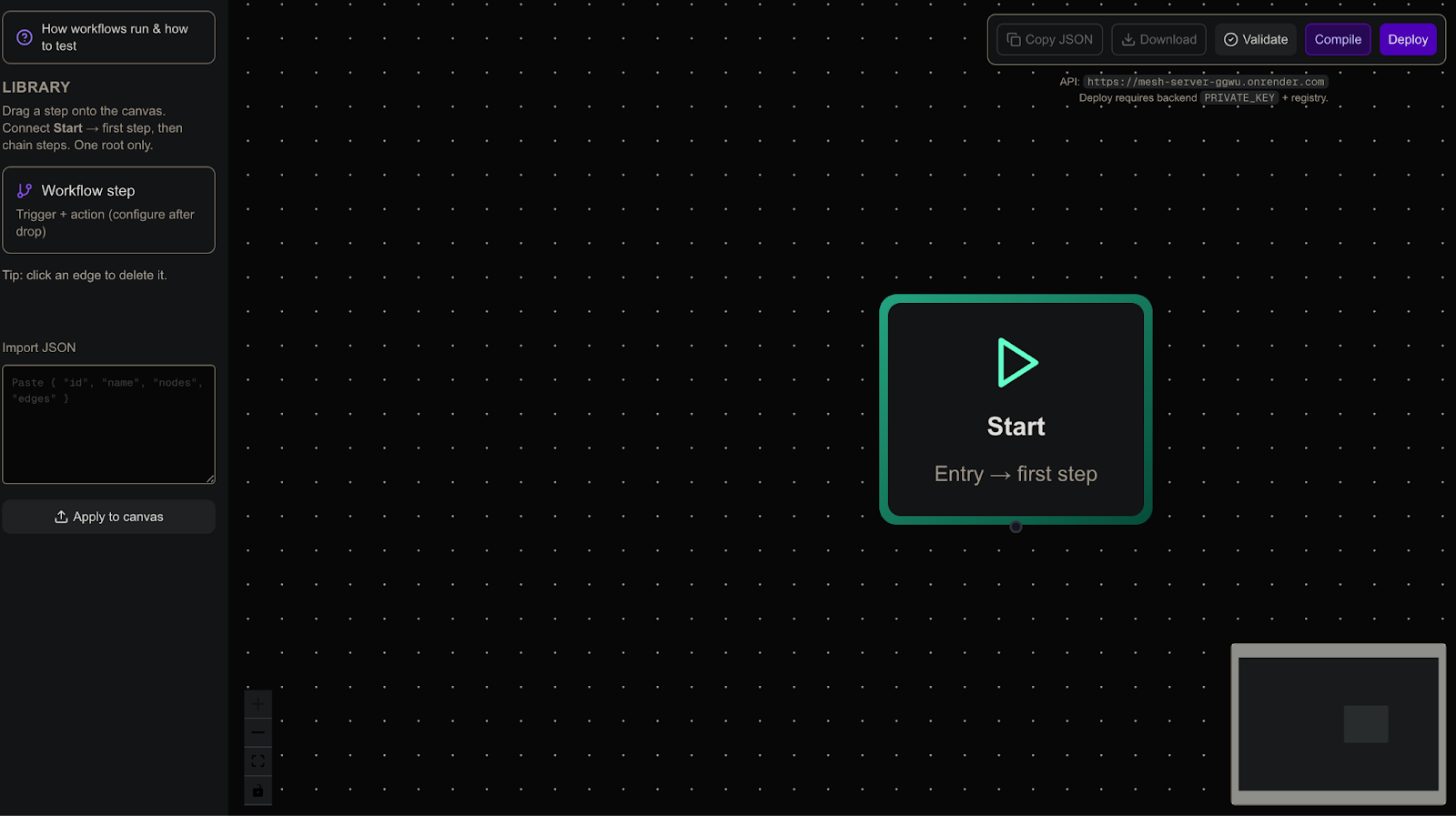
Mesh is a reactive workflow engine for teams building multi-contract automation on Somnia. Users describe workflows as JSON DAGs containing triggers, optional conditions, contract calls, and emit steps. Mesh validates the DAG, compiles it into SomniaEventHandler-based contracts, deploys them to the testnet, registers them in an on-chain WorkflowRegistry, and wires up Reactivity SDK subscriptions so validators invoke handlers when matching events fire.
Wagerverse
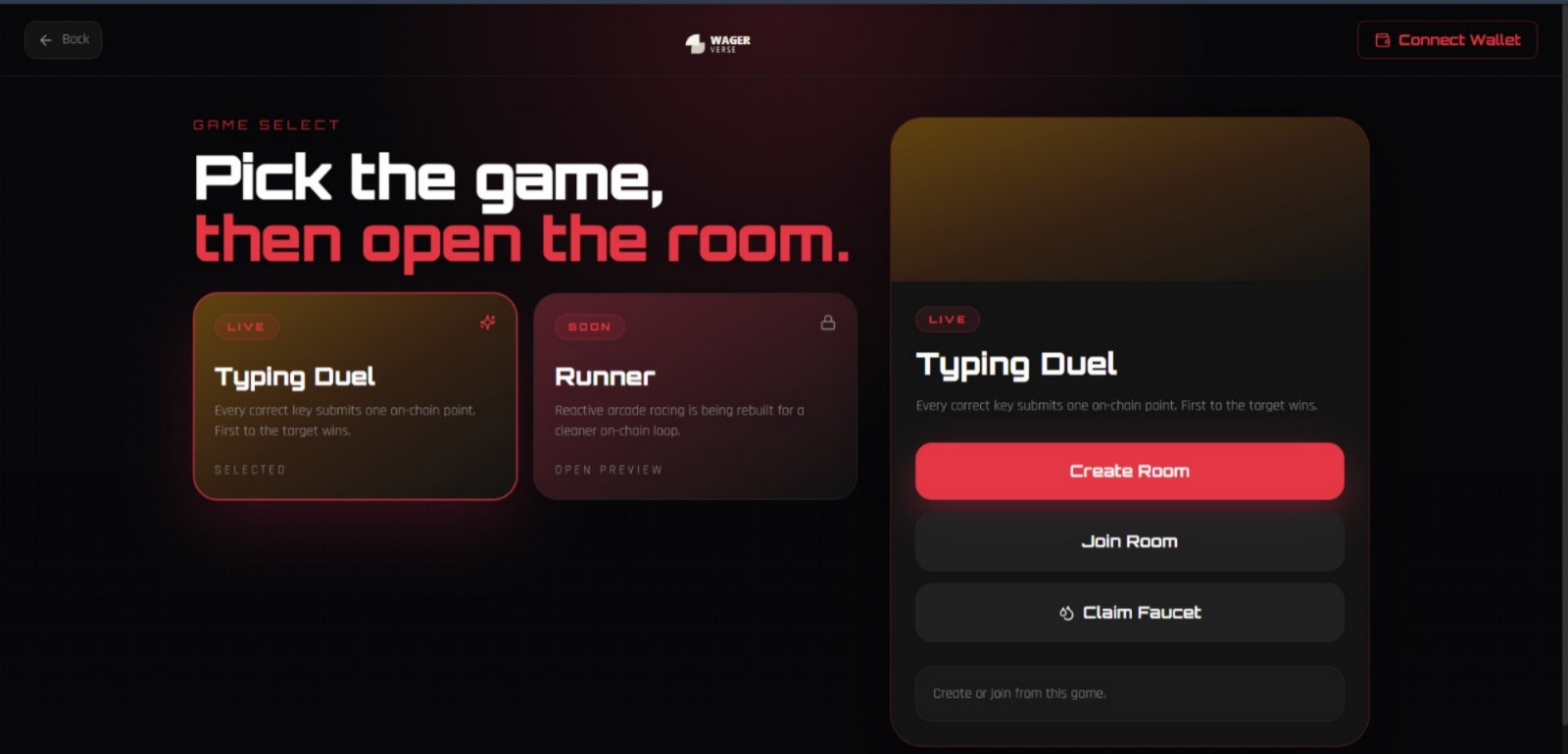
Wagerverse is a multiplayer betting app where gameplay, win detection, and settlement all happen on-chain. Players create public or private rooms, stake assets from their main wallet, and play through a delegated gameplay wallet so every action hits the chain without signing popups.
The first live game is Typing Duel, where every correct keystroke writes one point on-chain and emits a ProgressReported event. A Somnia Reactivity subscription listens to these events and targets the arena contract itself as the handler. The moment a player reaches the target score, Reactivity invokes the arena back on-chain. The contract reads its own state, verifies the win, settles the room, and releases the payout in the same execution. The frontend reflects the result but doesn’t cause it.
This is a meaningful architectural distinction: the contract determines when the game is over, because Reactivity routes gameplay events back into the on-chain settlement logic. The system also includes upgradable profile NFTs and live activity tracking.
SomniaSure
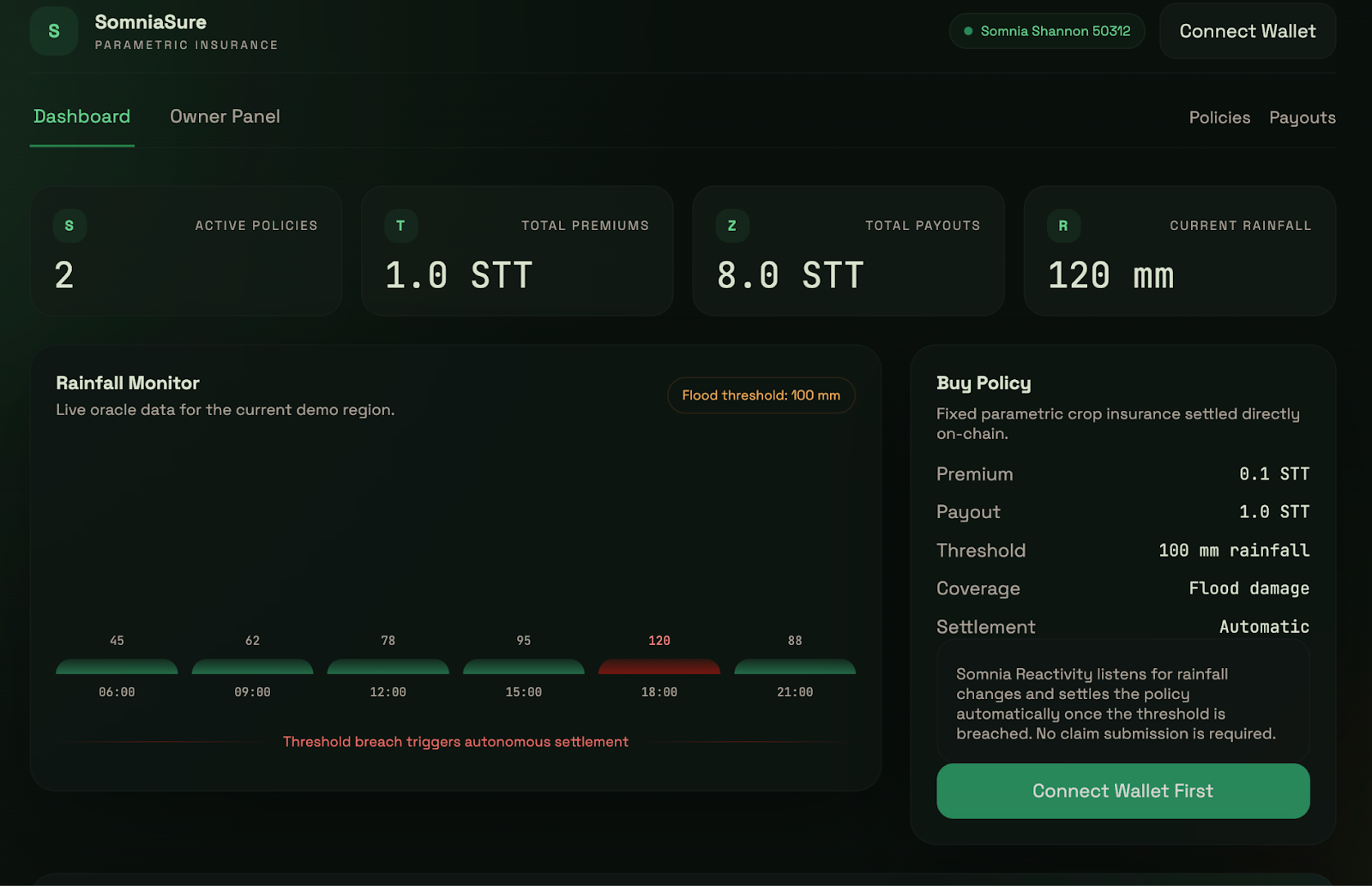
SomniaSure is a parametric crop insurance protocol where Somnia Reactivity replaces the entire claims process. A farmer in a flood-prone region pays 0.1 STT to insure their crops. If rainfall exceeds 100mm, they receive 1 STT automatically after the oracle event fires. No claim form, no adjuster, no waiting period.
The system uses both layers of Somnia Reactivity. On-chain, a ReactiveArbitrator contract inherits SomniaEventHandler and is invoked by validators via the 0x0100 Reactivity precompile when a WeatherOracleMock emits a WeatherUpdated event. The handler evaluates active policies and triggers payouts automatically. Off-chain, the frontend uses the Reactivity TypeScript SDK with WebSocket subscriptions to show live policy state without polling.
The Future is Reactive
The range of submissions is the most telling thing about this hackathon. Builders applied the same reactive primitive to crypto inheritance, autonomous gaming, copy trading, DeFi protection, insurance, betting, referral systems, and workflow automation. Several teams built chained subscriptions where one reactive event triggers another, creating multi-step autonomous flows that resolve in a single block.
Somnia Reactivity is available today on testnet. If you’re building, you can start with the documentation, and join ongoing discussions with other builders in the Somnia Discord and Developer Telegram channel.
gSomnia