
Somnia’s theme is speed, so it’s fitting that we’ve spent the past year speedrunning the process of launching a blockchain. We’ve come a long way since we first announced the project in early 2024. Now, as we approach the launch of our mainnet, we want to get the community up to speed on the journey we’ve had so far.
How Somnia Started
Blockchain scalability remains a central challenge, especially for applications that need to support large numbers of users at once. Early collaborators from MSquared and Improbable faced this problem directly when building large-scale metaverse experiences, sparking a broader question: what if these environments were not only massively shared, but also enabled true ownership and interoperability of digital assets?
The answer required infrastructure that didn’t yet exist: A high-speed blockchain optimized for rich, onchain experiences. Improbable, through its web3 R&D efforts, played a role in conceptualizing the possibilities of such a blockchain. Paul Thomas, then VP of Product Management at Improbable and now Somnia’s founder, was among the engineers who began exploring novel solutions.

Their research led them to the “Autobahn” study, a breakthrough in high-speed consensus models, which eventually helped inspire Somnia’s novel blockchain approach.
Improbable soon realised that the Somnia blockchain had the potential to fulfil many different use cases, beyond being the blockchain layer underpinning MSquared’s network of interconnected and interoperable metaverses. Further, building a layer-1 blockchain of this scale required a dedicated and independent effort. So Somnia was spun out as its own operational, web3 based entity, governed independently and focused exclusively on high-performance, composable, fully onchain applications.
Real-World Use-Cases
Shortly after Somnia launched the Shannon Testnet in early 2025, there were already over 60 projects building on the blockchain, with many more on the way. Some of the projects announced so far include games like Sparkball, Maelstrom, Variance and Dark Table CCG.
There were also interesting experiments like Chunked, a fully onchain multiplayer voxel builder.
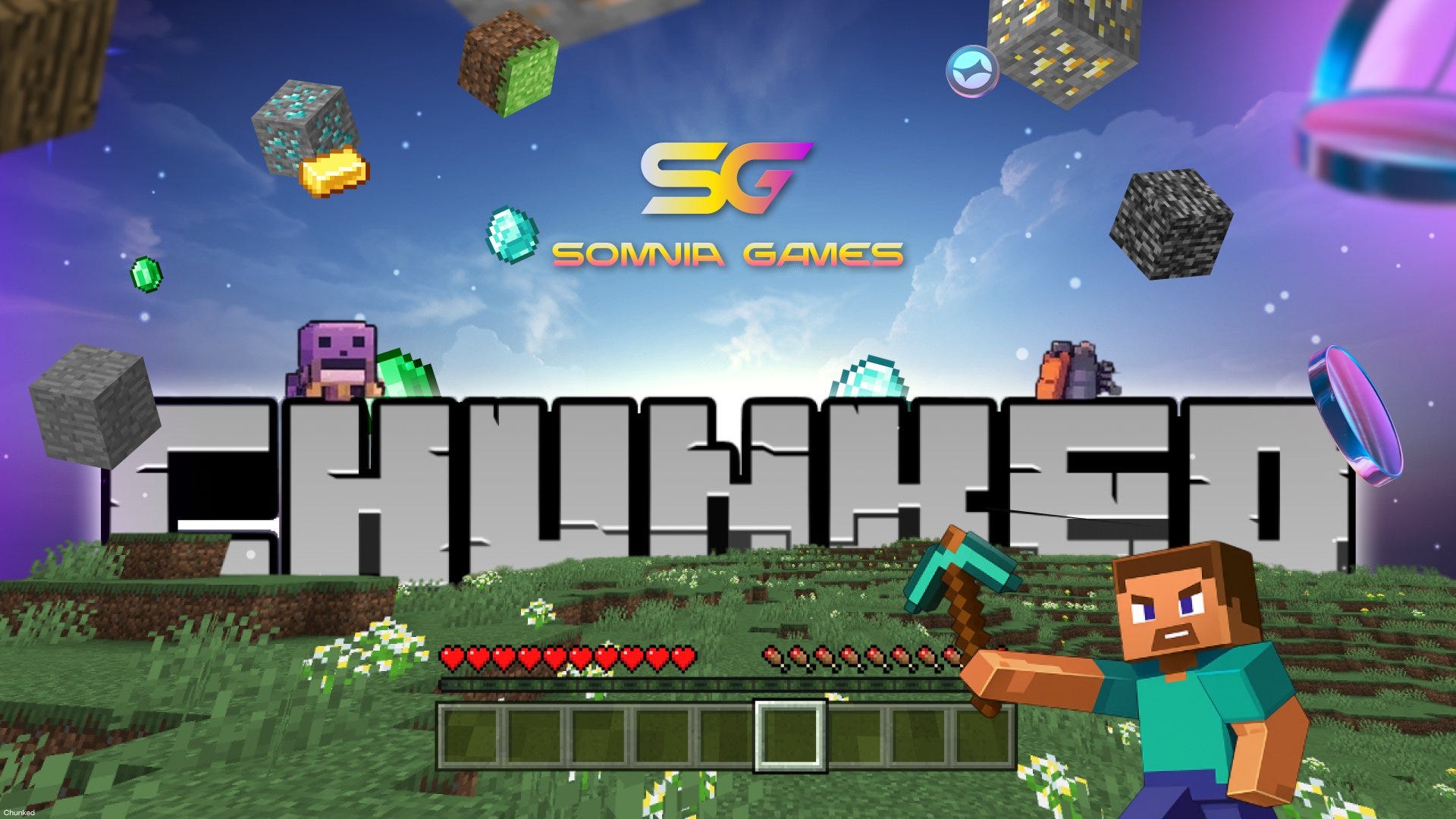
Chunked was initially created as a prototype to push the boundaries of Somnia’s speed and infrastructure, but it quickly became a favorite among the community as soon as it went live. Over 250 million transactions were generated during the first Chunked campaign, and it became so popular that the Somnia community ended up mining everything in the entire world. Chunked has recently rebooted in a more polished-form with expanded resources and a bigger environment, still fully onchain.
In June 2025, Somnia also partnered with Jitter to enable on-chain, real-time multiplayer livestreams featuring top Twitch creators Ludwig and Mizkif.

Jitter is a massive multiplayer experience that allows streamers to play with thousands of their fans in real time. For these streams, all of the actions in the game were recorded onchain, but the thousands of users who were playing didn’t even realize that they were interacting with a blockchain. This was an early glimpse of Somnia’s dream being realized, bringing new users into web3 through fun, accessible experiences where the blockchain is not a barrier to entry.
Somnia is the blockchain for gaming and entertainment, but it will also be home to plenty of cutting-edge DeFi applications as well. Standard, for example, is a Central Limit Order Book (CLOB) that offers the experience of a centralized exchange, but fully onchain.
Somnia’s Mission and Vision
Somnia’s performance capabilities can open the door for new blockchain use-cases and allow new sectors to adopt the technology. Now the imaginative ideas that inspired many developers to start building in web3 are finally possible, from decentralized social media and ridesharing to gaming and music distribution.
Somnia also makes it possible for developers to build applications fully onchain, allowing them to fully tap into the power of blockchain technology. With applications fully onchain, developers can implement novel features and they can build on each other's work. In DeFi this process of collaboration and composability is often described as “Money Legos,” because applications can easily integrate with one another, or just build on the existing framework themselves. For the most part, this has only been possible with financial applications, but with Somnia, we can bring this level of composability to data-heavy consumer applications like games and social networks.
As these kinds of applications gain traction, the blockchain infrastructure behind them will begin to fade into the background. Today, most conversations in web3 are still about the tech. We use awkward terms like “Non-Fungible Token” and we constantly compare networks based on their technical tradeoffs. But in traditional tech, people talk about their favorite apps, not the servers or hosting providers they run on. Only developers talk about things like HTML or AWS. Web3 is heading in that same direction. As better dApps emerge, they will become the focus, while the infrastructure will lose its novelty and become ubiquitous. That shift will happen gradually, then all at once, but none of it is possible without the right infrastructure. That’s where Somnia comes in.
Independence as Part of Growth
Somnia works with many partners, and continues to expand its collaborations across gaming studios, creators, DeFi builders, and infrastructure providers. Programs such as the $10 million ecosystem grant and the Dream Catalyst accelerator (in partnership with Uprising Labs) are designed to onboard the next generation of builders.
Crucially though, Somnia is governed independently and is not owned or controlled by any of its supporters or partners. The project is led and operated by its own board and management.
Somnia’s long-term vision is to become a decentralized ecosystem with many independent players contributing to its growth. The roadmap ahead includes decentralizing the core components of the project, ensuring that no single entity has control over the network or its direction. Governance and infrastructure will increasingly be shared with the community, giving developers and users a greater role in shaping the future of the protocol.
Somnia also plans to grow its ecosystem by continuing to support new projects. In addition to onboarding developers, this means working on consumer-facing frontends that feel familiar and intuitive to a web2 audience. Games, social apps, and creator tools that run on Somnia will be designed to appeal to users who may not care about web3 at all.