
Censorship resistance was one of the main features that inspired the initial development of the crypto industry. Bitcoin was designed to be censorship resistant money for a financial system that was open to everyone and controlled by no one.
In the years that followed, many other blockchains were developed in the hopes of creating decentralized applications that had the same censorship resistant properties of Bitcoin. The result was some of the coolest applications that we’ve ever seen, especially in DeFi with decentralized market makers and lending platforms.
However, developers quickly discovered that putting entire applications onchain was not feasible with the technology that existed. Many thought that it would be impossible forever. This reality led to numerous tradeoffs and compromises like using offchain interfaces to connect with DeFi smart contracts, or hybrid approaches with web3 games and social networks.
Censorship Resistance: A Web3 Feature
This drove the industry forward and led to innovation that created a multi-trillion dollar market, but censorship resistance was something that got lost along the way. The issue is still more important than ever though, no matter which sector you’re looking at. There are constant battles about censorship on social media platforms, with people across the political spectrum complaining about being silenced by algorithms.
This is an ongoing debate in the gaming world as well. Just this month there was a massive controversy about games with adult themes being removed from Steam after lobbying by a small group of agitators. The games in question were admittedly quite grotesque, but there was still a massive backlash and outcry from the gaming community, who were concerned about the slippery slope that such precedents would create. Today they might be banning something that everyone can agree is bad, but that could open up the door for them to come after games like Grand Theft Auto, which has been a target for decades despite being one of the top-selling entertainment franchises of all time.
This concept is well-known to web3 users. There are a lot of low-value products in the industry, but most of us recognize that putting restrictions on what people can create will ultimately slow down innovation and prevent many high-value products from ever reaching the market.
More Resilient Applications
Hybrid approaches to building in web3 sacrifice censorship resistance, is because the centralized servers that run the applications and interfaces are a single point of failure. It’s very easy for them to flip a switch at AWS and take a website online. Developers who are able to interact directly with smart contracts could still use the applications, but most people wouldn’t know how to do that, and this will be especially true as we start to abstract more of the blockchain away.
Now if an application is running entirely onchain, that’s a different story, that application can live as long as the blockchain does. There are some exceptions, like the case of Tornado Cash, which even if fully onchain would have been sanctioned by the government, and while it would still exist, using it would be effectively banned. Transactions through Tornado Cash have reduced significantly since the sanctions were imposed, as you can see from the metrics below from Dune. The smart contract could not be taken offline, it still lives forever, but most jurisdictions have made it impossible to use, as all addresses that interact with it are blacklisted by all traditional financial institutions and major exchanges.

This is a very rare case though that an application causes as much controversy as Tornado Cash. More appropriate examples here would be a hypothetical ban on games like Grand Theft Auto or the United State’s government’s incoherent TikTok policy, which had the application not fully banned, but temporarily removed from app stores.
The Decentralized Library
In 2020, Reporters Without Borders launched The Uncensored Library in Minecraft. It was basically a digital space that made banned journalism accessible in countries with restricted press freedom. The project used Minecraft’s open architecture to house over 200 articles that had been censored in various parts of the world. Players could enter the server or download the map and read real journalism in virtual bookstands, with each section dedicated to a specific country.
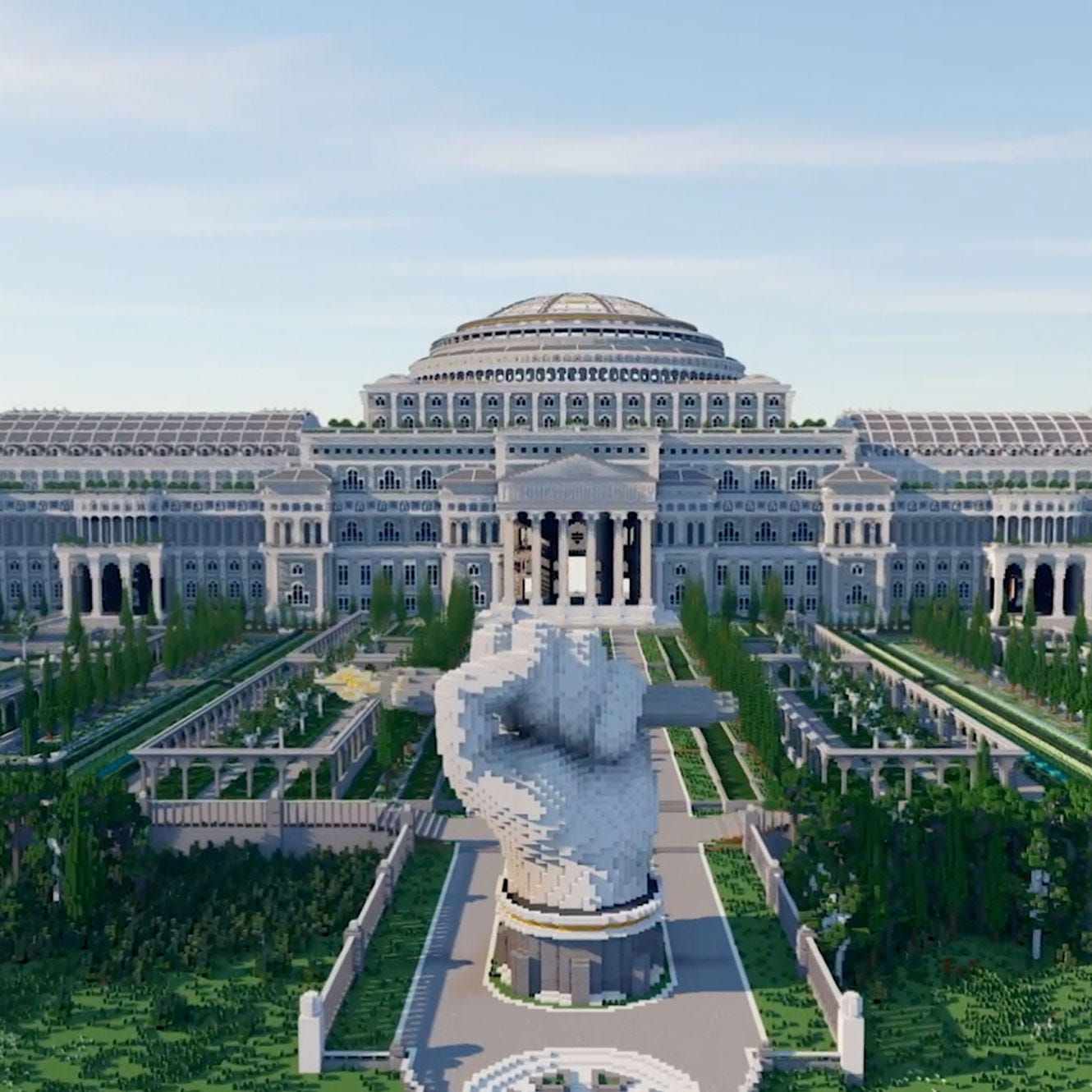
This was a smart use of existing infrastructure to work around authoritarian controls, and it resonated widely. But as clever as it was, the project still relied on centralized services. If the server host was pressured to take it offline, or if future versions of Minecraft limited user-hosted content, the library’s availability could be compromised.
Fully onchain systems offer a way to carry this idea forward without those points of failure. If the same content were stored and distributed through smart contracts on a censorship-resistant blockchain, it would be far more difficult to suppress. The Minecraft library was a powerful proof of concept. The next step is to apply that same thinking to public networks that are globally accessible, resilient by design, and not controlled by any single company.
Now It’s Possible
With Somnia’s fast and affordable blockchain, it’s finally feasible to put large amounts of data, and entire applications fully onchain. Censorship resistance is just one of many advantages to building onchain, but it’s something that doesn't get as much attention as it should, especially considering how it's always a trending topic in web2.
We’ve seen what’s possible when people get creative with the tools they have. Projects like The Uncensored Library found ways to get information past censors using the infrastructure that was available at the time. But we’re no longer limited to clever workarounds. The tools now exist to build applications that are resistant to takedowns from the start.
Fully onchain applications don’t need permission to exist. They can run independently of corporate platforms, centralized servers, or gatekeeping app stores. As more developers recognize what’s possible, we’ll see a shift in how applications are built, and who gets to decide what stays online.
https://somnianetwork.substack.com/?r=12ul6f&utm_campaign=subscribe-page-share-screen&utm_medium=web
🔥🔥